
AI, Fitness, and the Responsibility That Comes With Influence
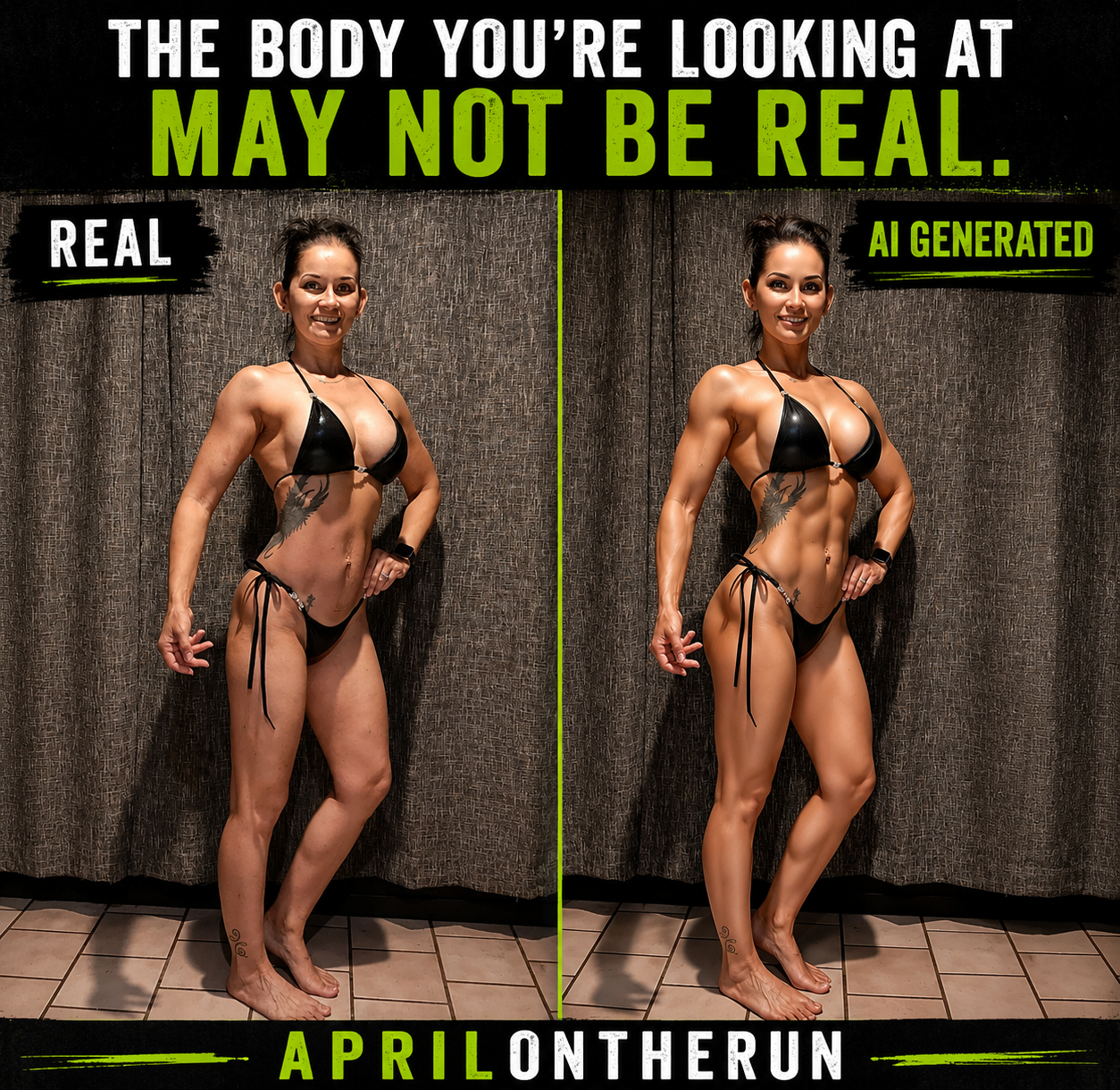
There was a time when fitness transformations were some of my favorite things to see online.
Someone would show where they started, share the work they put in, and show where that work eventually took them.
The progress was the point.
The struggle was part of the story.
The imperfections made the accomplishment more impressive.
Now we’re entering a different era.
AI can change someone’s body in a photograph almost instantly. It can add muscle, remove body fat, sharpen definition, alter proportions, enhance symmetry and create a physique that may have never existed in reality.
And that’s where I have a problem.
Not with AI itself.
With using it to deceive people.
There’s a difference between editing a photo and creating a false transformation.
Let’s be honest: photography has always involved editing.
Lighting can change how someone looks.
Angles can change proportions.
Posing can dramatically change a physique.
There is nothing inherently wrong with taking a good photograph or presenting yourself at your best.
But there’s a line.
If you use AI to substantially alter your physique and then present that image as your actual body, your actual progress, or your actual transformation without disclosing that it was altered…
you’re no longer simply editing a photograph.
You’re creating a false representation.
And your audience deserves to know the difference.
Someone is going to compare their real body to your fictional one.
This is the part I think people need to consider.
The person scrolling through your post doesn’t know what’s been changed.
They see the abs.
They see the tiny waist.
They see the enormous shoulders.
They see the dramatic muscle separation.
They see the transformation.
And they think:
“Why don’t I look like that?”
Maybe they’re training five days a week.
Maybe they’re eating well.
Maybe they’re sleeping.
Maybe they’re doing everything they’re supposed to be doing.
And they’re still looking at their real body in the mirror wondering why they aren’t getting the same results.
They don’t realize they’re comparing their reality to someone else’s artificial creation.
That’s not motivation. That’s a false standard.
Fitness already has enough unrealistic expectations without us manufacturing more.
And it becomes even more serious when you’re representing a brand or selling something.
This is where I believe the conversation needs to go beyond social media vanity.
If you’re simply making an AI image for entertainment, creativity or a fictional concept, that’s one thing.
But if you’re an athlete, ambassador, coach, influencer or sponsored representative using an AI-altered physique while simultaneously selling something, the stakes are different.
Because now your appearance isn’t simply content.
It’s part of the marketing.
Maybe you’re promoting a supplement.
Maybe you’re selling a training program.
Maybe you’re coaching clients.
Maybe you’re an athlete representing a company.
Maybe you’re using your physique to promote a meal service, apparel, competition prep or another fitness-related product.
Whatever the product or service is, your audience may reasonably assume that the body they’re seeing is your actual body.
And that matters.
If you’ve substantially altered your physique with AI and don’t disclose it, you’re potentially creating a false association between the product you’re selling and the results you’re displaying.
That’s a problem.
Don’t sell people a result you didn’t actually achieve.
If you’re promoting a supplement and your photograph has been AI-enhanced to make you significantly leaner or more muscular, what exactly are you communicating?
If you’re selling coaching while displaying a physique that isn’t actually yours, what are your clients supposed to believe they’re working toward?
If you’re an ambassador for a fitness brand and the image you’re using to represent yourself doesn’t accurately reflect your real physique, you’re not just misleading your followers.
You’re potentially misleading the company you’re representing, too.
And if that company is paying you to represent its products, your image becomes part of its advertising.
That’s a responsibility.
Your credibility is part of the product.
People don’t just buy fitness products because of a logo.
They buy because they trust the person recommending them.
That’s why brands hire athletes, coaches and ambassadors in the first place.
Your experience provides credibility.
Your results provide social proof.
Your reputation provides trust.
So when the physique being used as that social proof is artificially created, you’ve undermined the very thing that made your endorsement valuable.
And that doesn’t just hurt the consumer.
It can eventually hurt the brand, too.
This isn’t about demanding perfection.
I want to make that distinction very clear.
I’m not saying you need to post unflattering pictures.
I’m not saying you can’t pose, flex, use good lighting, find your best angle or make normal photographic adjustments.
Show yourself at your best.
Just make sure your best is actually you.
Real bodies aren’t perfectly symmetrical.
Real bodies fluctuate.
Real bodies hold water.
Real bodies gain and lose weight.
Real bodies have stretch marks, scars, cellulite, veins, softness and imperfections.
Real physiques take time.
Sometimes a lot of it.
That’s what makes them impressive.
If AI changes the reality, disclose it.
If you use AI to visualize what you might look like after years of training, say that.
If you’re creating a fictional character, make it clear.
If you’re using AI for an artistic concept, label it.
There is nothing wrong with AI when people understand what they’re looking at.
The problem is when someone intentionally hides the fact that an image has been substantially altered because they know the real version wouldn’t get the same reaction.
That’s where integrity comes into question.
And the more influence you have—and especially the more money you make from that influence—the greater that responsibility becomes.
Your audience trusts you with more than a double tap.
If you’re an athlete or ambassador, people may buy the products you recommend.
If you’re a coach, they may follow your programming.
If you’re an influencer, they may spend their money based on your recommendation.
If you’re a sponsored athlete, your audience may associate your physique and performance with the brand you’re representing.
That’s a relationship built on trust.
So don’t manipulate that trust by showing someone a body you didn’t actually earn and allowing them to believe that it is real.
Don’t sell people a fantasy and call it your results.
Real progress doesn’t need to be perfect.
Some of the most impressive transformations I’ve seen weren’t the ones with the most dramatic before-and-after photographs.
They were the ones where you could see the work.
The person who gained five pounds of muscle over years.
The person who finally learned how to squat correctly.
The person who went from struggling with 135 pounds to moving 225.
The person who stayed consistent through injuries, setbacks, plateaus and bad training days.
The person who didn’t look perfect every day but kept showing up anyway.
That’s fitness.
That’s strength.
That’s progress.
And that’s what people need to see.
Stop selling perfection. Start showing reality.
I’m not against technology.
I’m not against AI.
I’m not against editing.
I’m against deception.
Because when you manufacture a body and present it as real, you’re not only misleading your followers.
You’re potentially making someone feel inadequate because their real body can’t compete with an image that isn’t real either.
And when you’re using that artificial image to sell a product, represent a brand, attract coaching clients or build your credibility in the fitness industry, the problem becomes even bigger.
Because now you’re not just creating unrealistic expectations.
You’re monetizing them.
That’s the part that bothers me.
Fitness should teach people what is possible through hard work, consistency, patience and realistic expectations.
Not convince them that their body is failing because it doesn’t look like something generated by a computer.
Your body doesn’t need to be AI-generated to be worth showing.
Your progress is enough.
Your real strength is enough.
Your real transformation is enough.
Your imperfections are enough.
Show people what the work actually looks like.
Because the most powerful transformation isn’t the one AI can create.
It’s the one you actually earned.
And if you’re going to ask people to trust you, buy from you, train with you or support the brand you represent…
give them something real to believe in.



Leave a Reply